start_date.Hampta Pass with Chandratal Trek
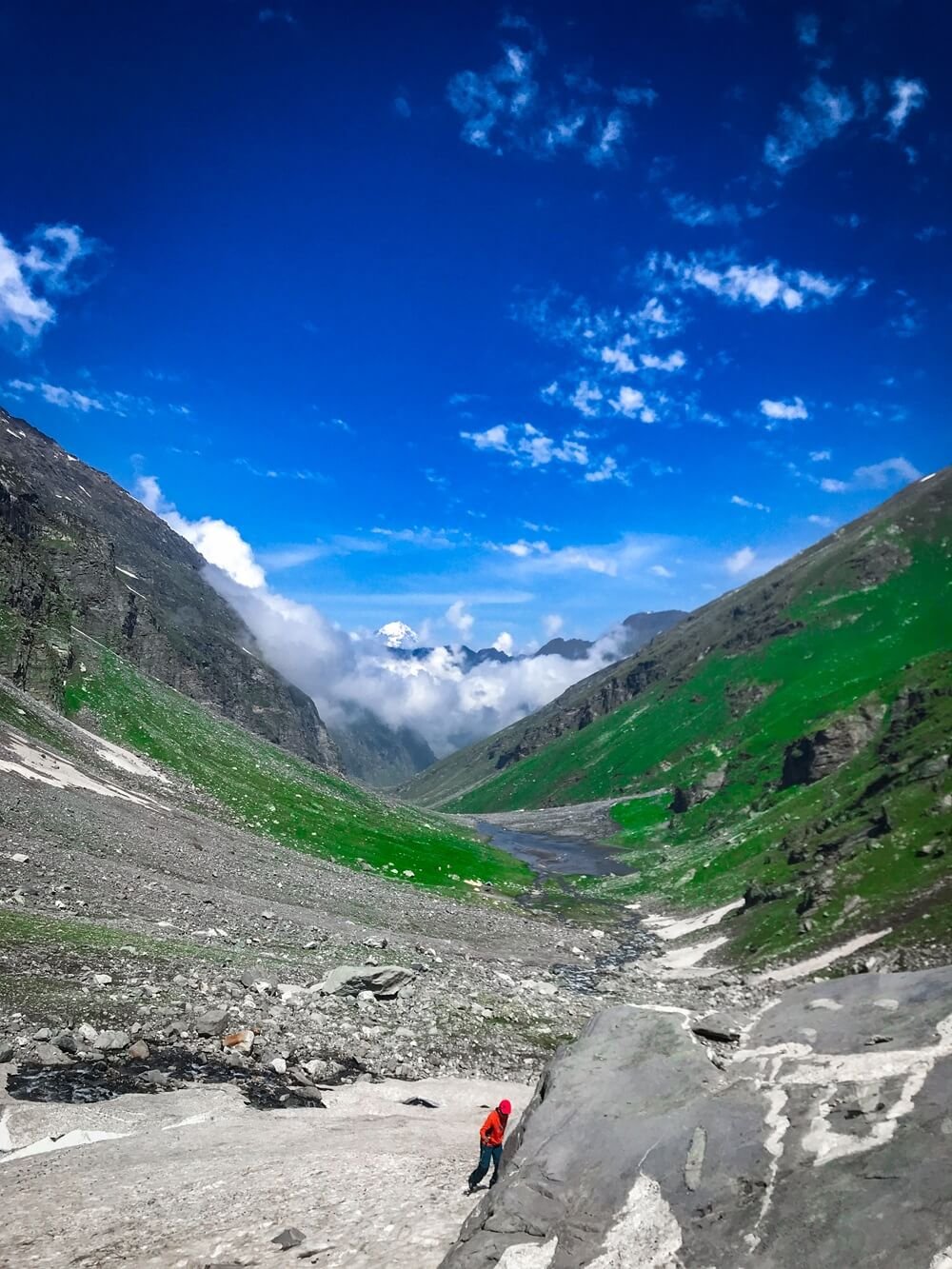
Hampta Pass is a high-altitude mountain pass in Himachal Pradesh, connecting the lush green Kullu Valley with the arid, high-altitude Lahaul Valley. The trek offers a rare cross-sectional view of two starkly different landscapes within a single trail. The journey begins in the verdant forests and meadows of Manali and ascends into the cold desert terrain of Spiti.
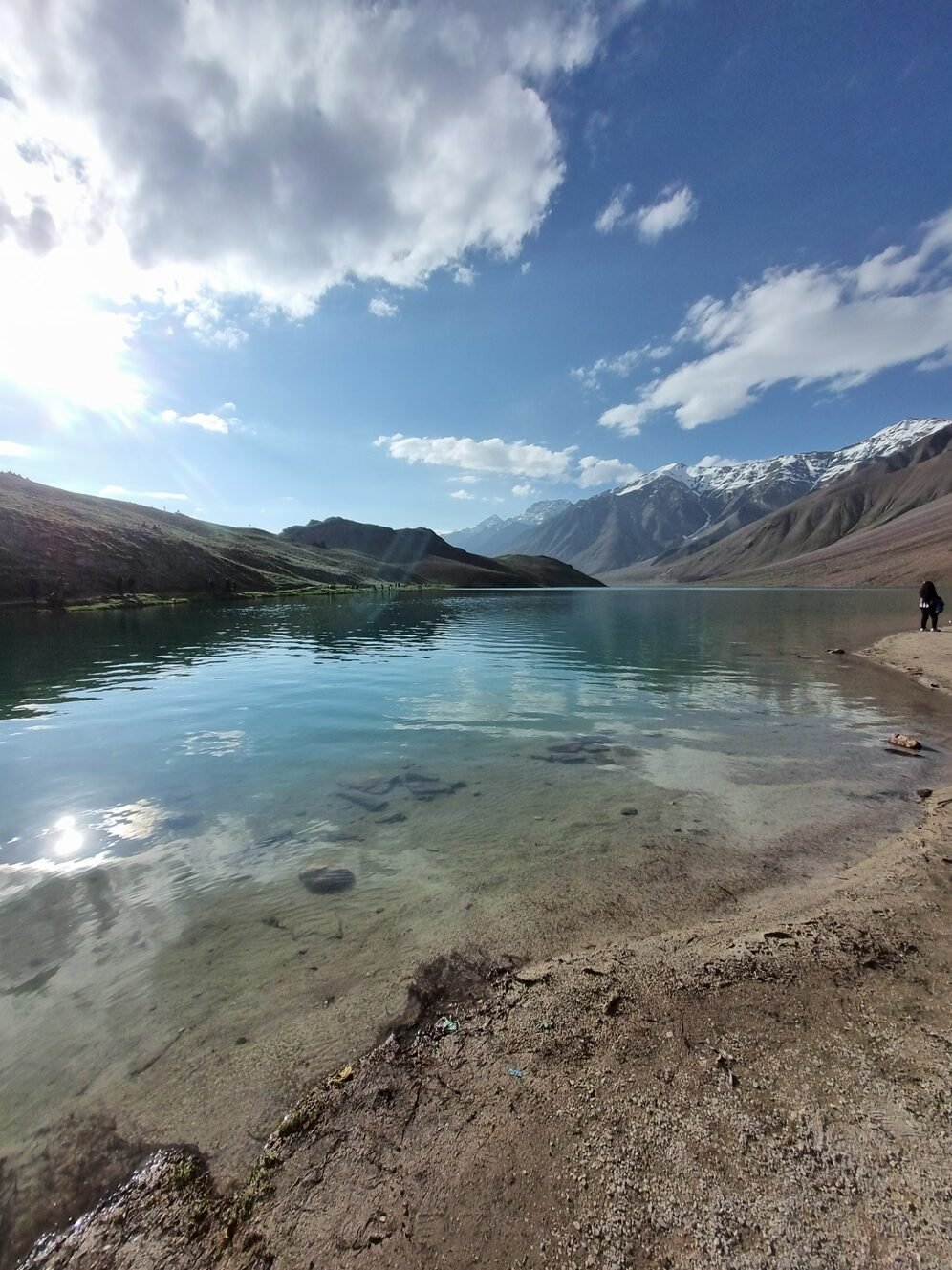
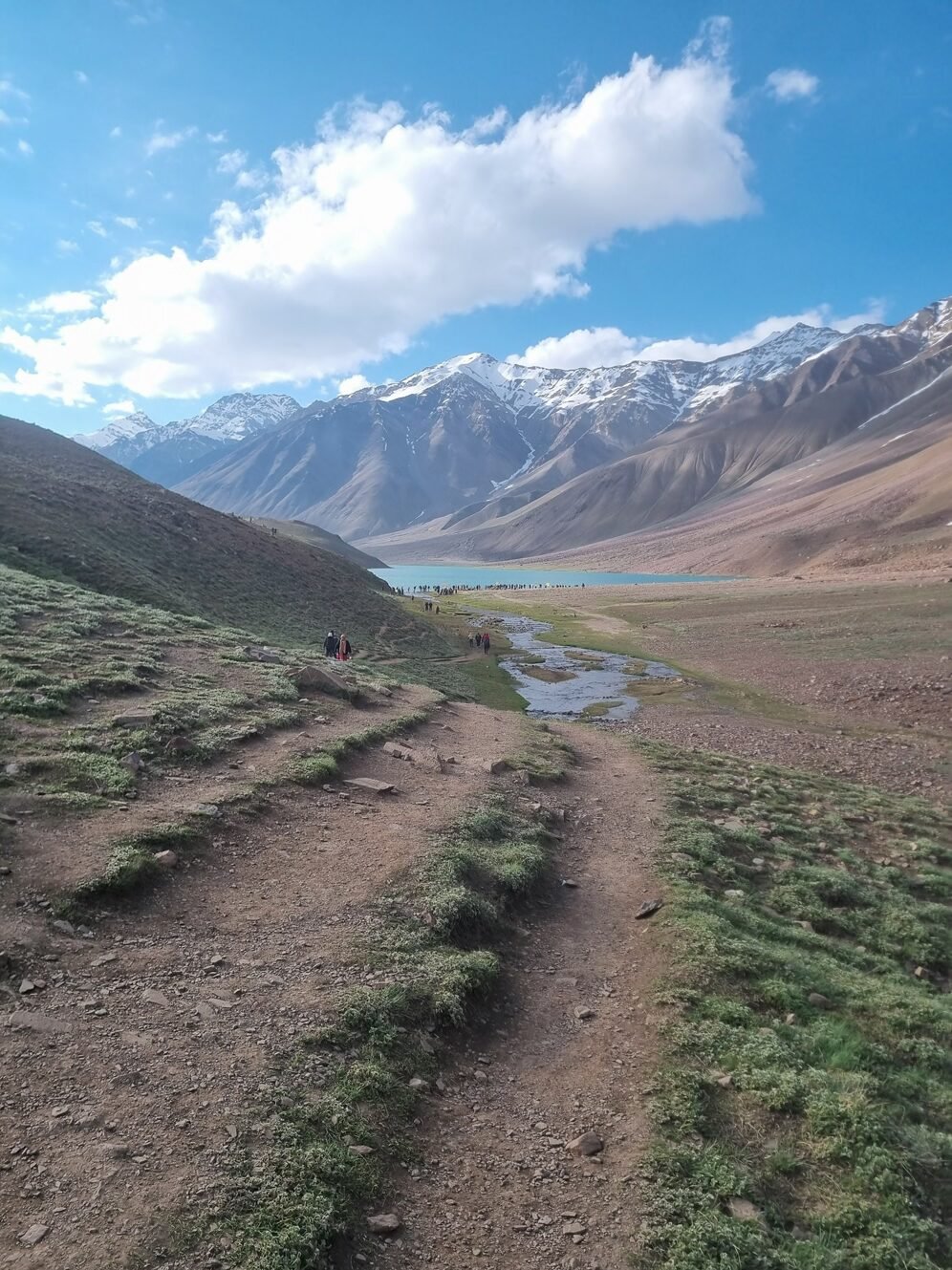
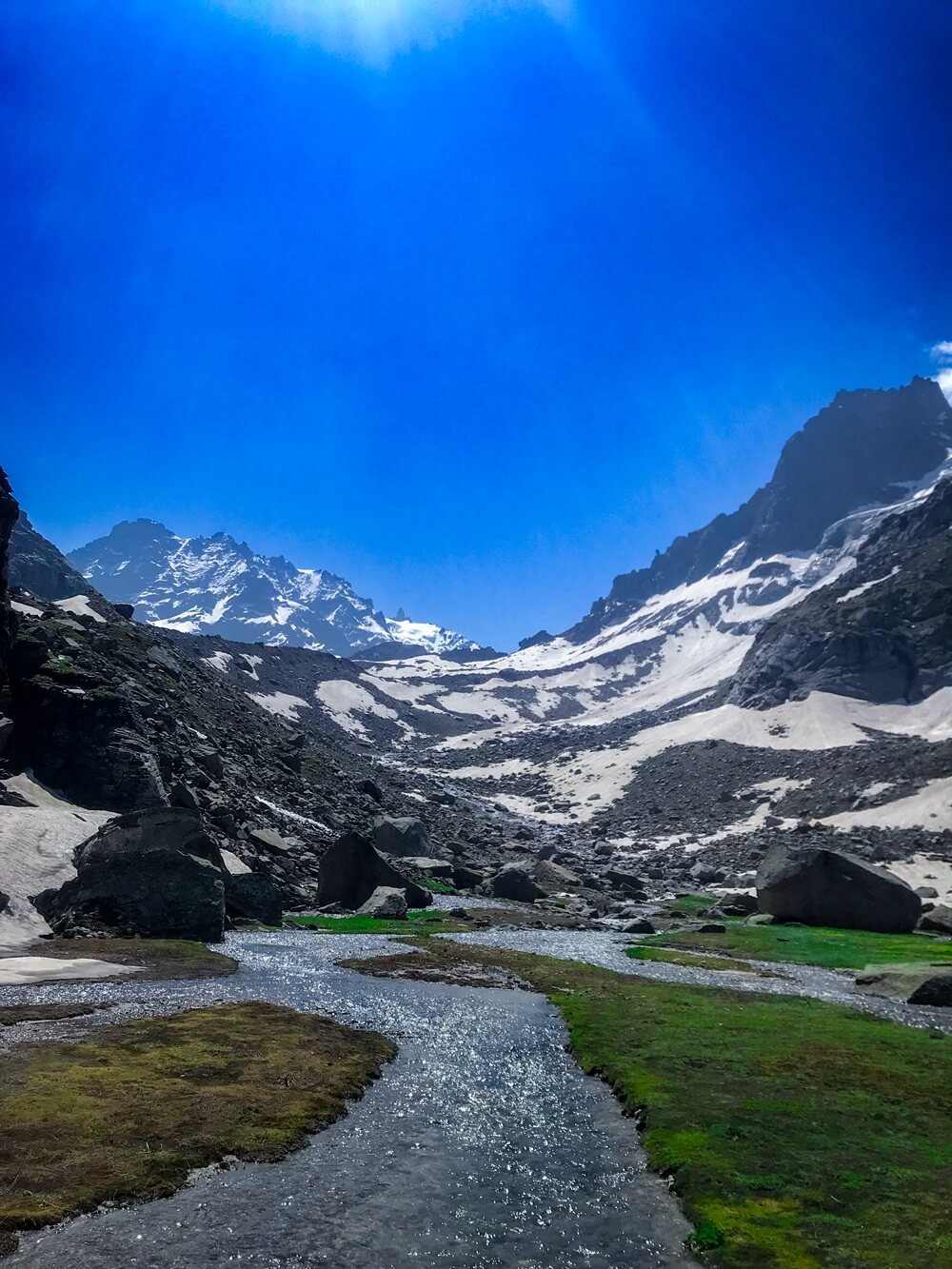
The highlight of the trek is the dramatic crossing over Hampta Pass, standing tall at 14,100 ft, followed by a spectacular drive to the mesmerizing Chandratal Lake (Moon Lake) — a stunning, crescentshaped alpine lake nestled at 14,000 ft. With panoramic views, contrasting ecosystems, and thrilling terrain, this trek is a perfect introduction to high-altitude Himalayan adventure for trekkers of all levels.
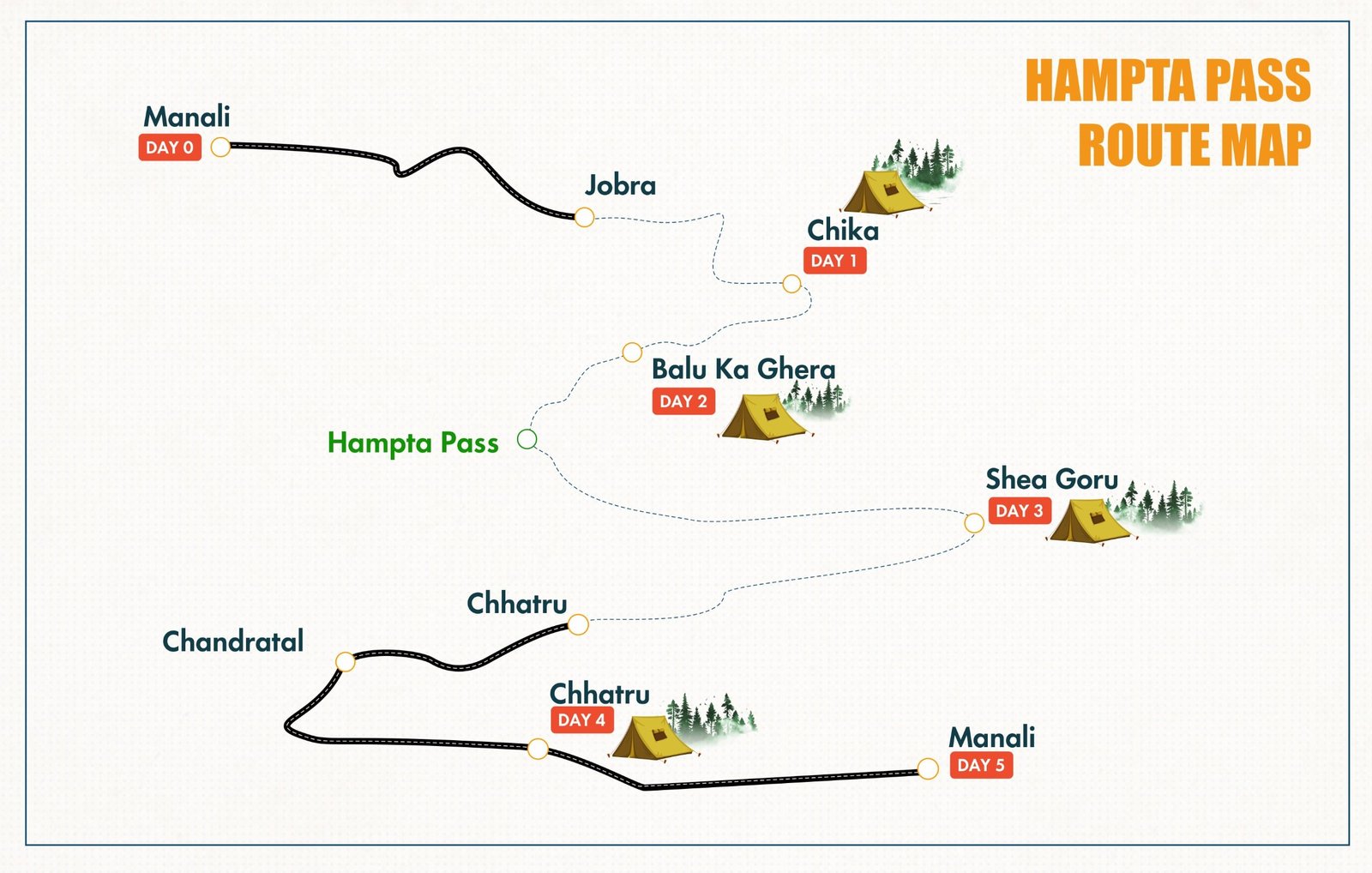
Itinerary
- Meet in Manali by 10:00 AM for the drive to Jobra, the trek’s starting point, located at the edge of a dense forest.
- The drive offers views of the Kullu Valley, pine forests, and the Beas River,
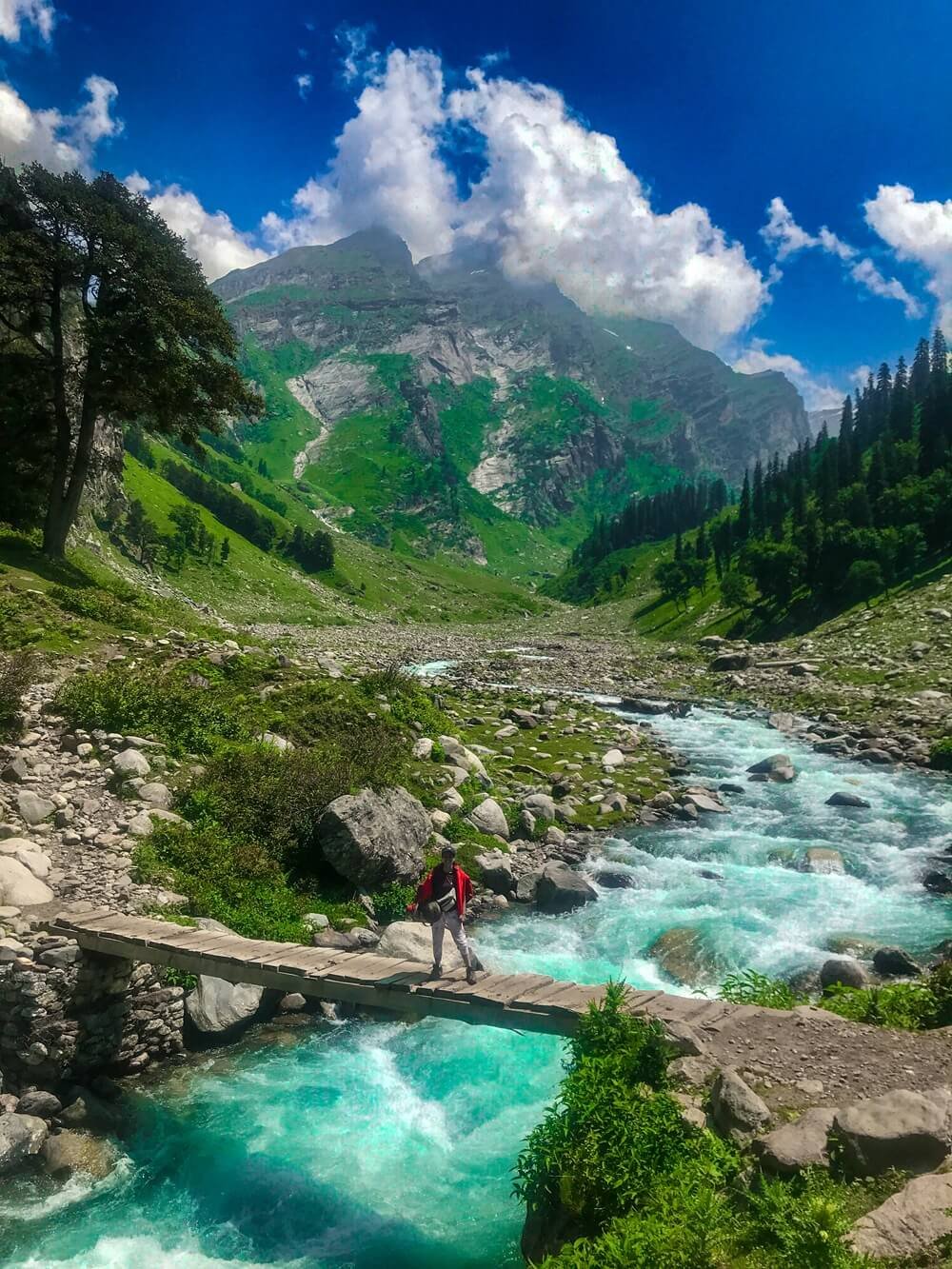
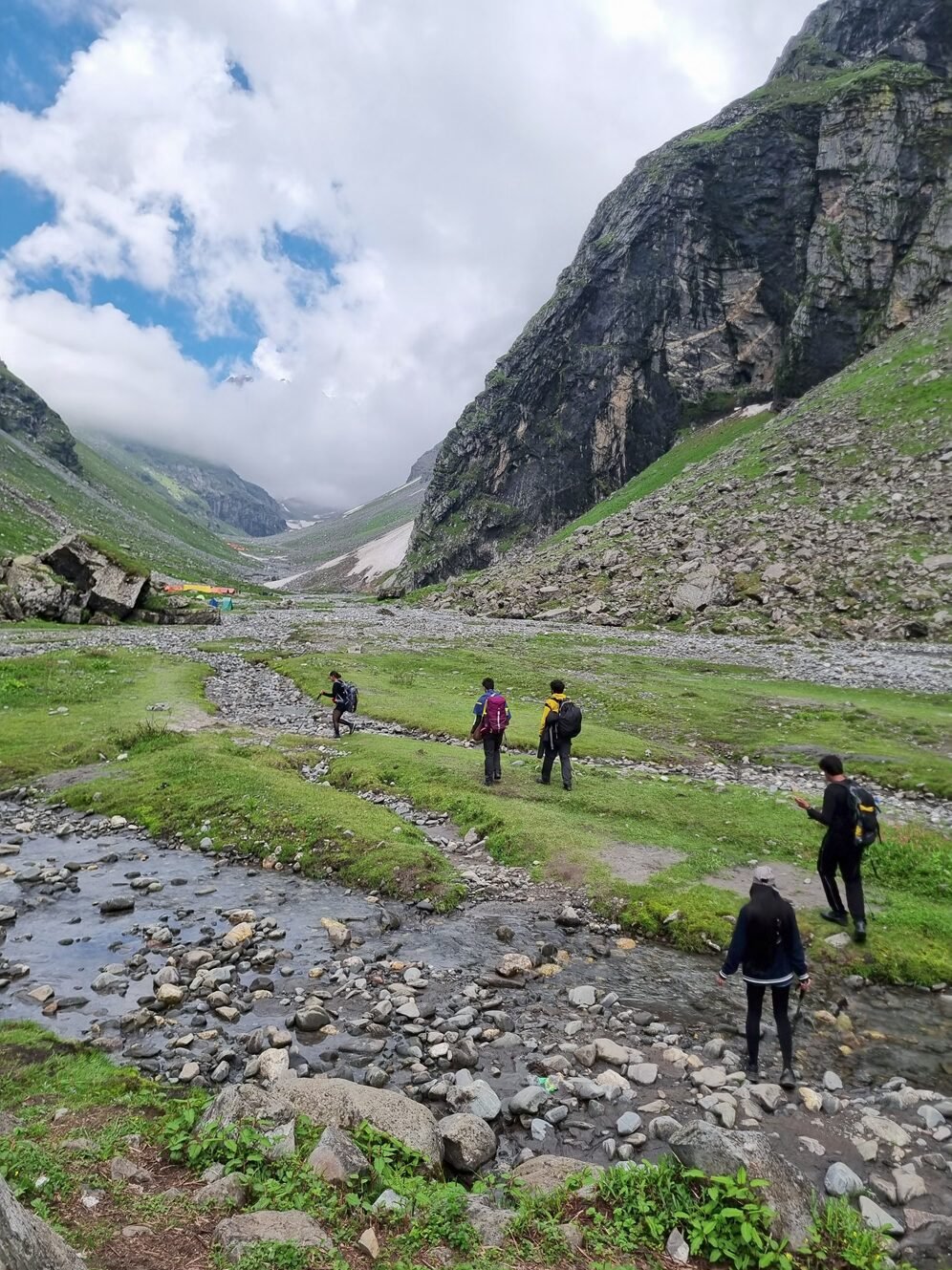
- Begin the trek from Jobra along a well-defined trail, crossing wooden bridges and small mountain streams.
- Trek through a lush forest of pine, maple, and birch, opening into grassy meadows as you approach Chika.
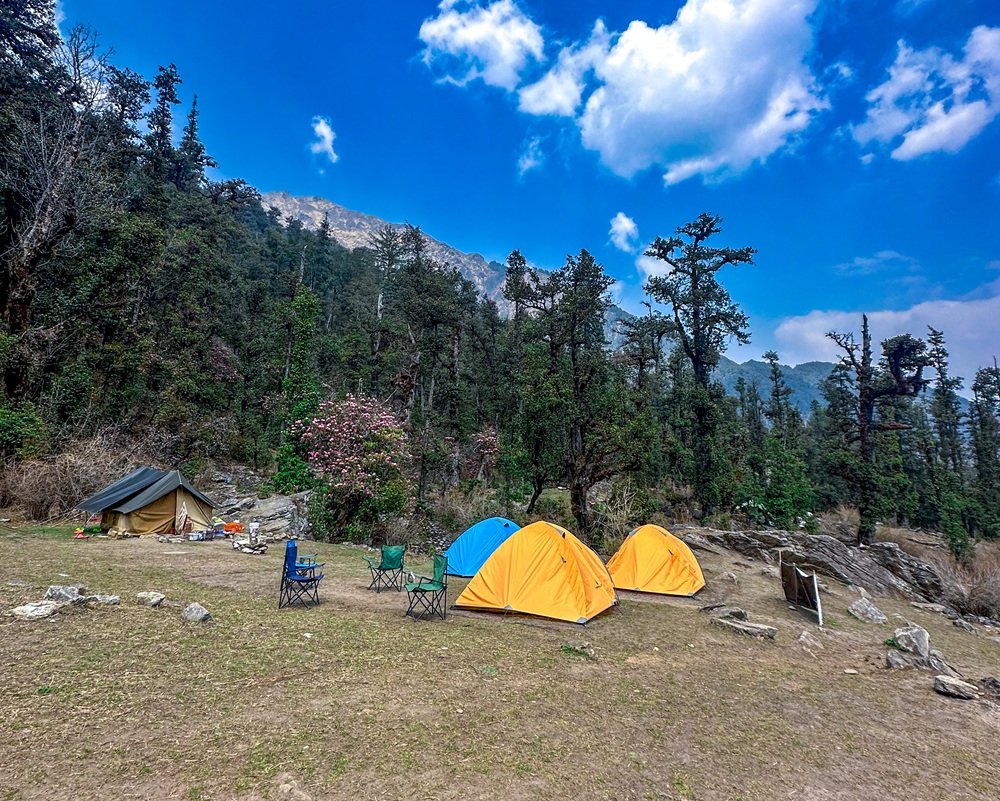
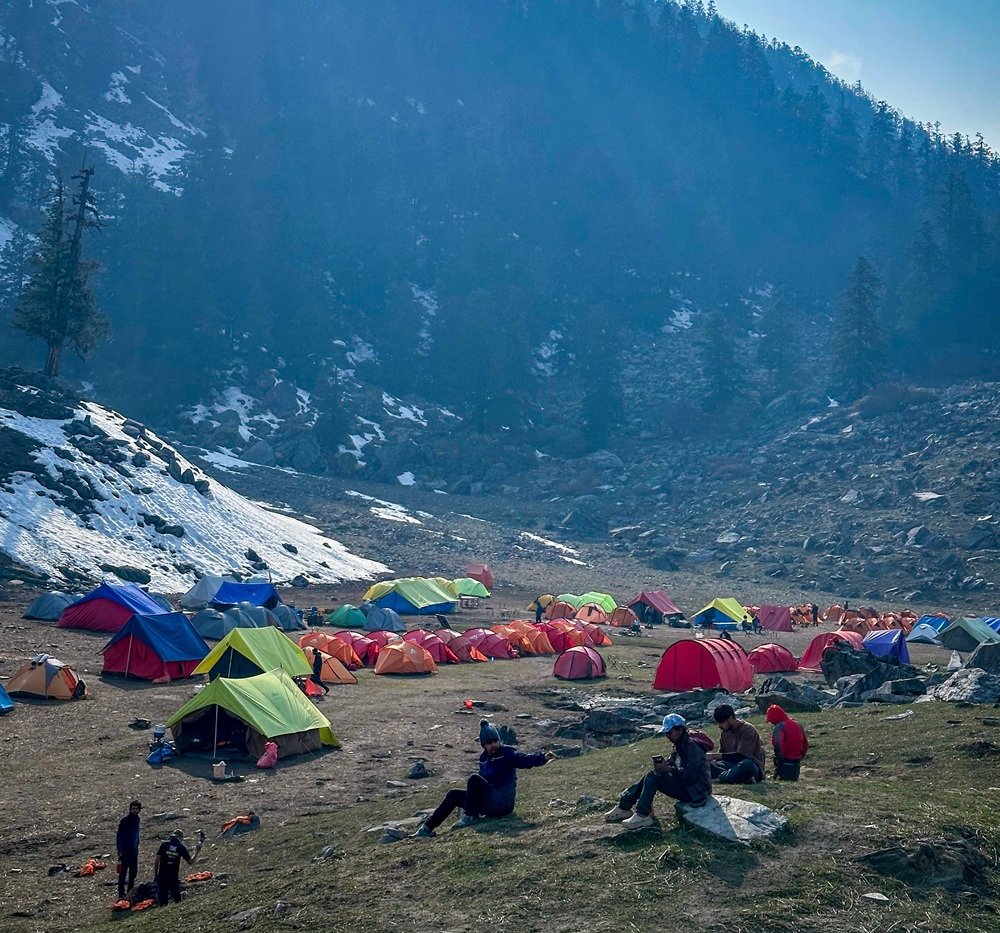
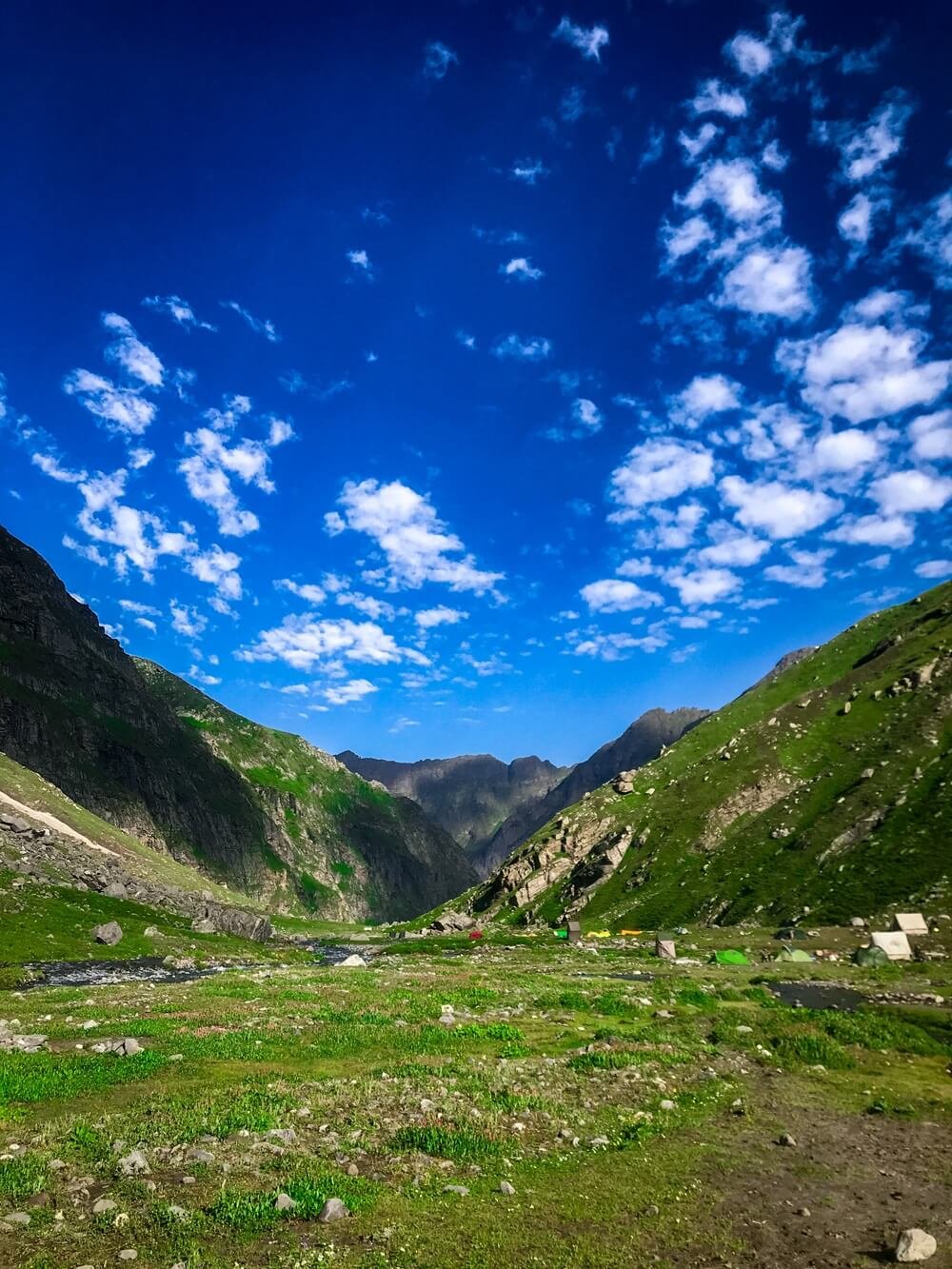
- Chika is a scenic camping ground beside a river, surrounded by rocky cliffs and wildflowers.
- Overnight Stay: Tents at Chika
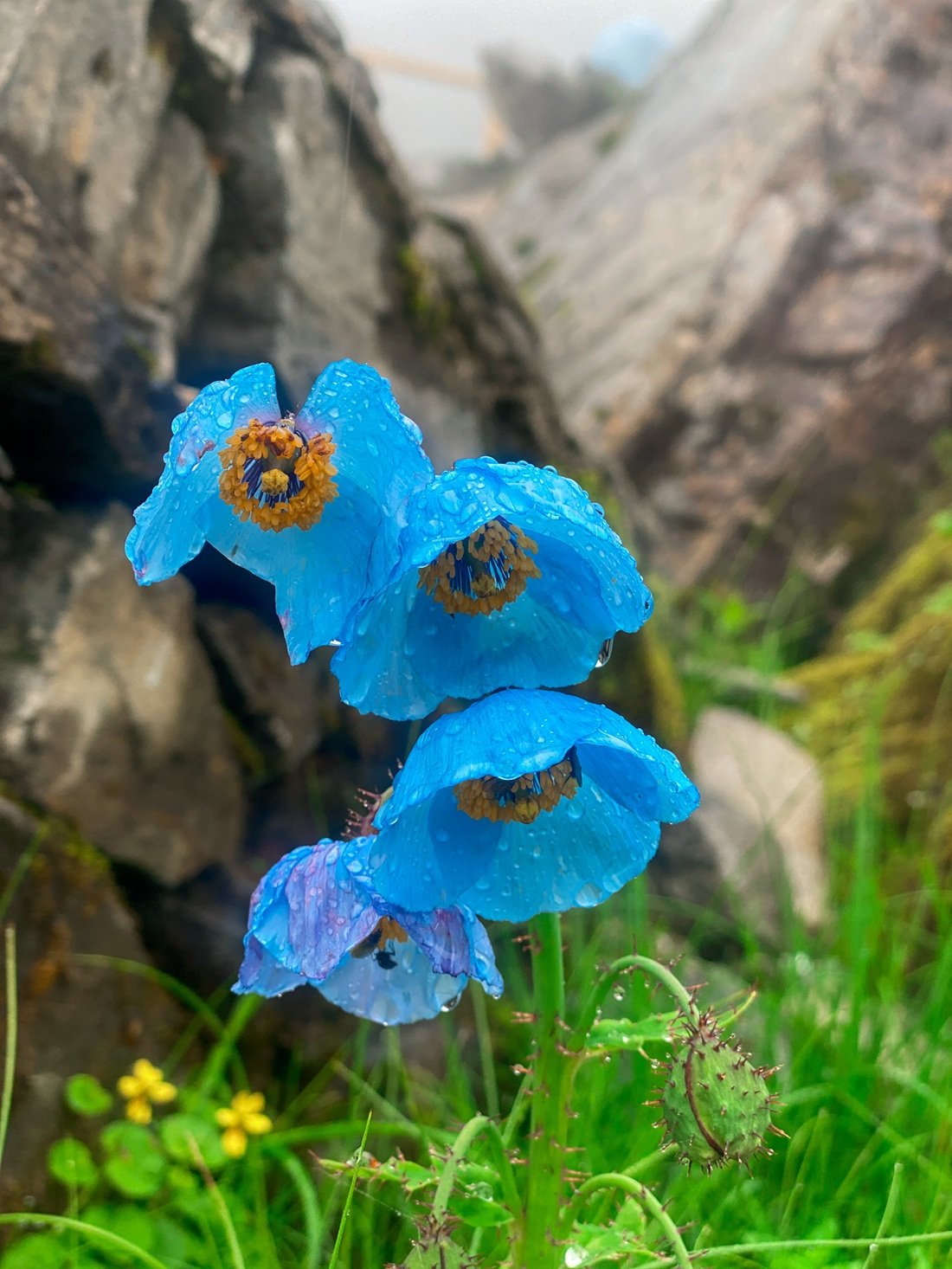
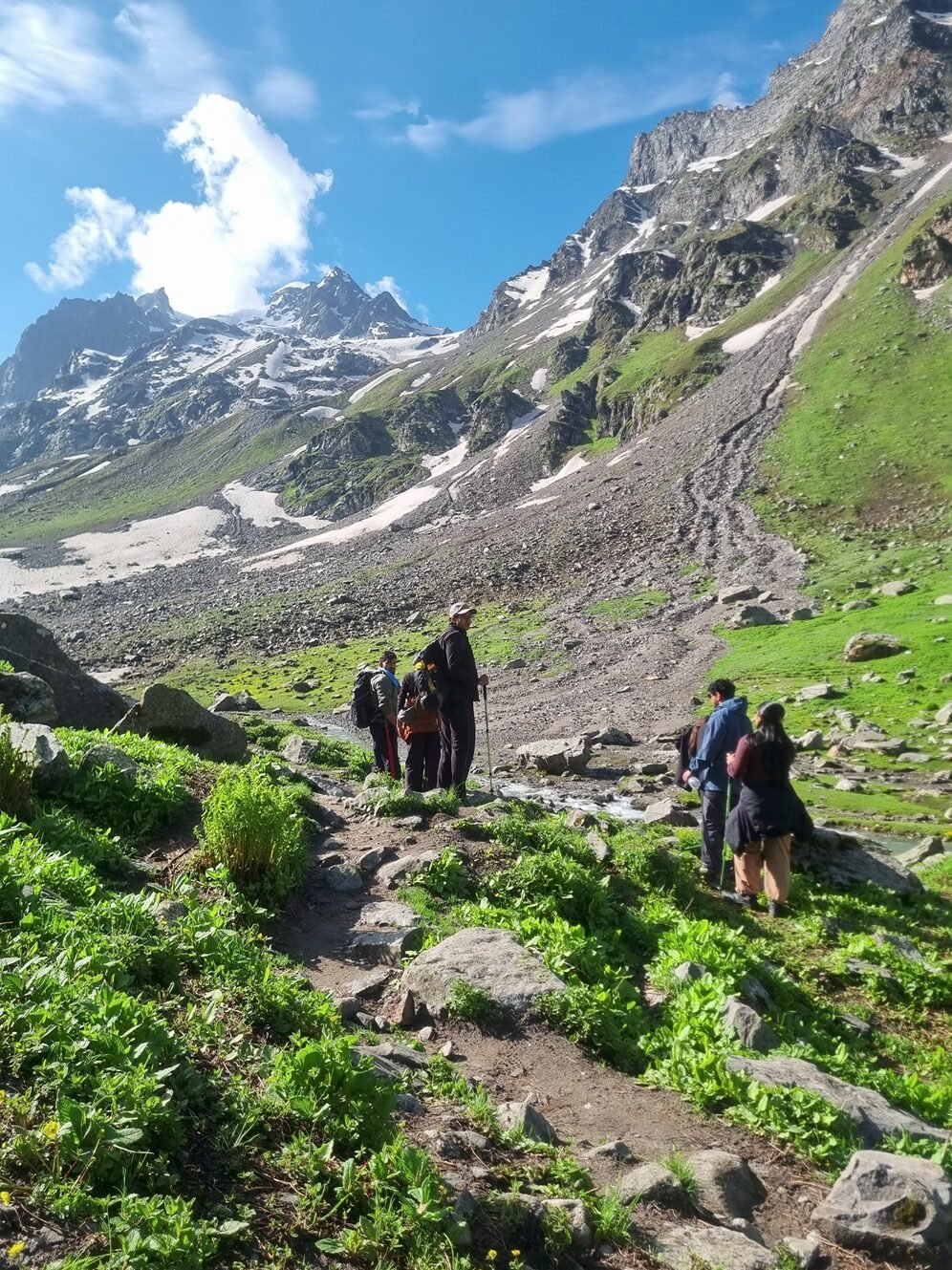
- Begin the day early with a gradual ascent through open valleys dotted with wildflowers.
- Cross several small mountain streams and enjoy views of cascading waterfalls.
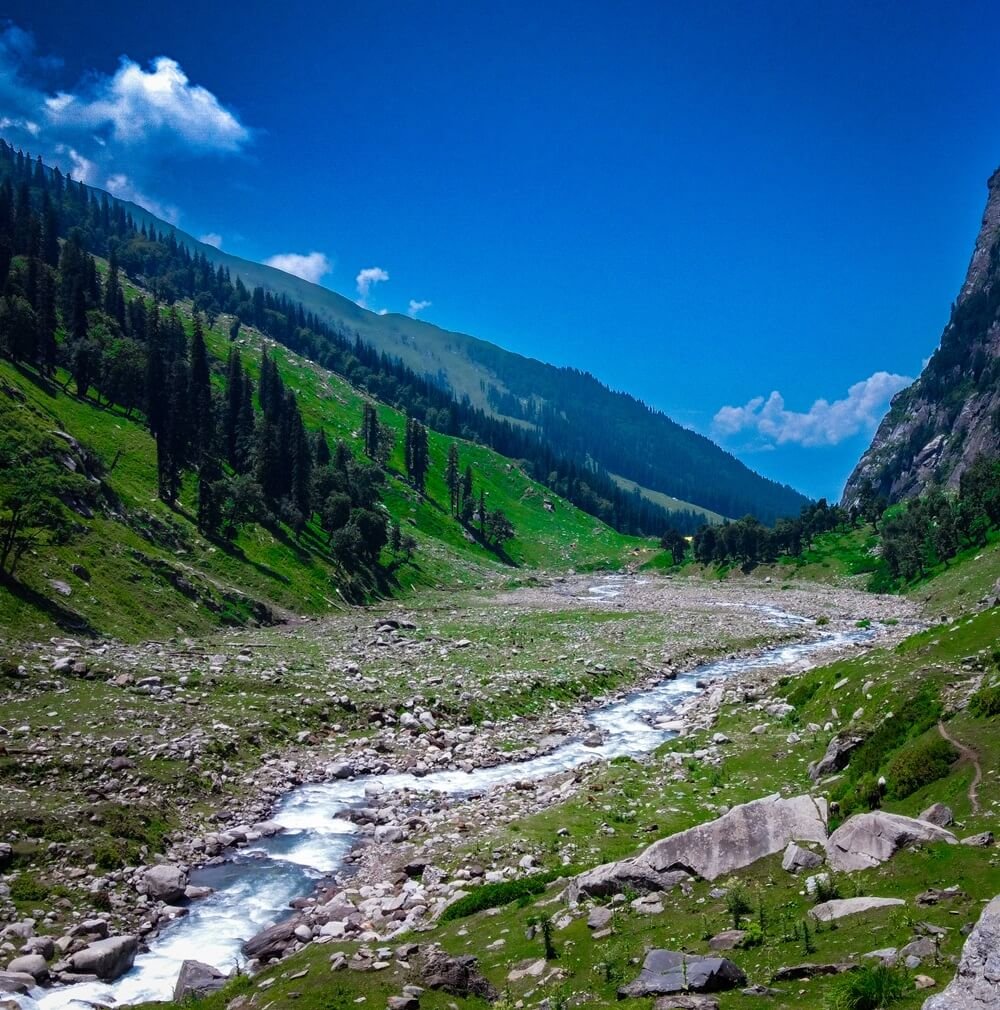
- Trek alongside the Rani Nallah, a glacier-fed stream flowing through the valley.
- View of Dhauladhar range and glacial streams adds to the scenic charm.
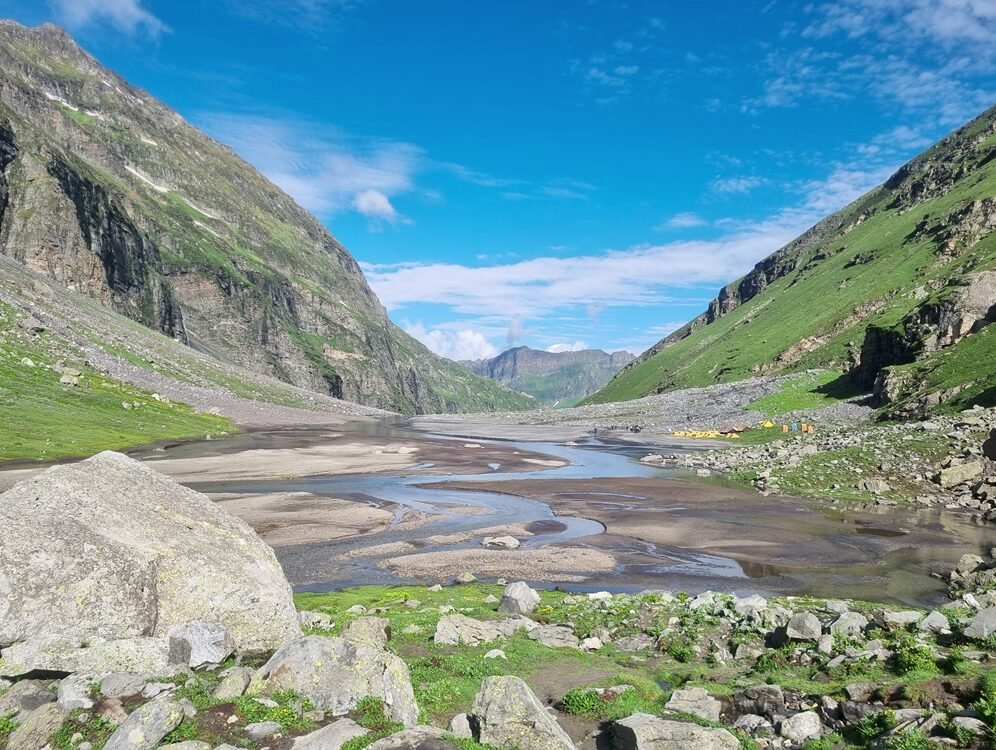
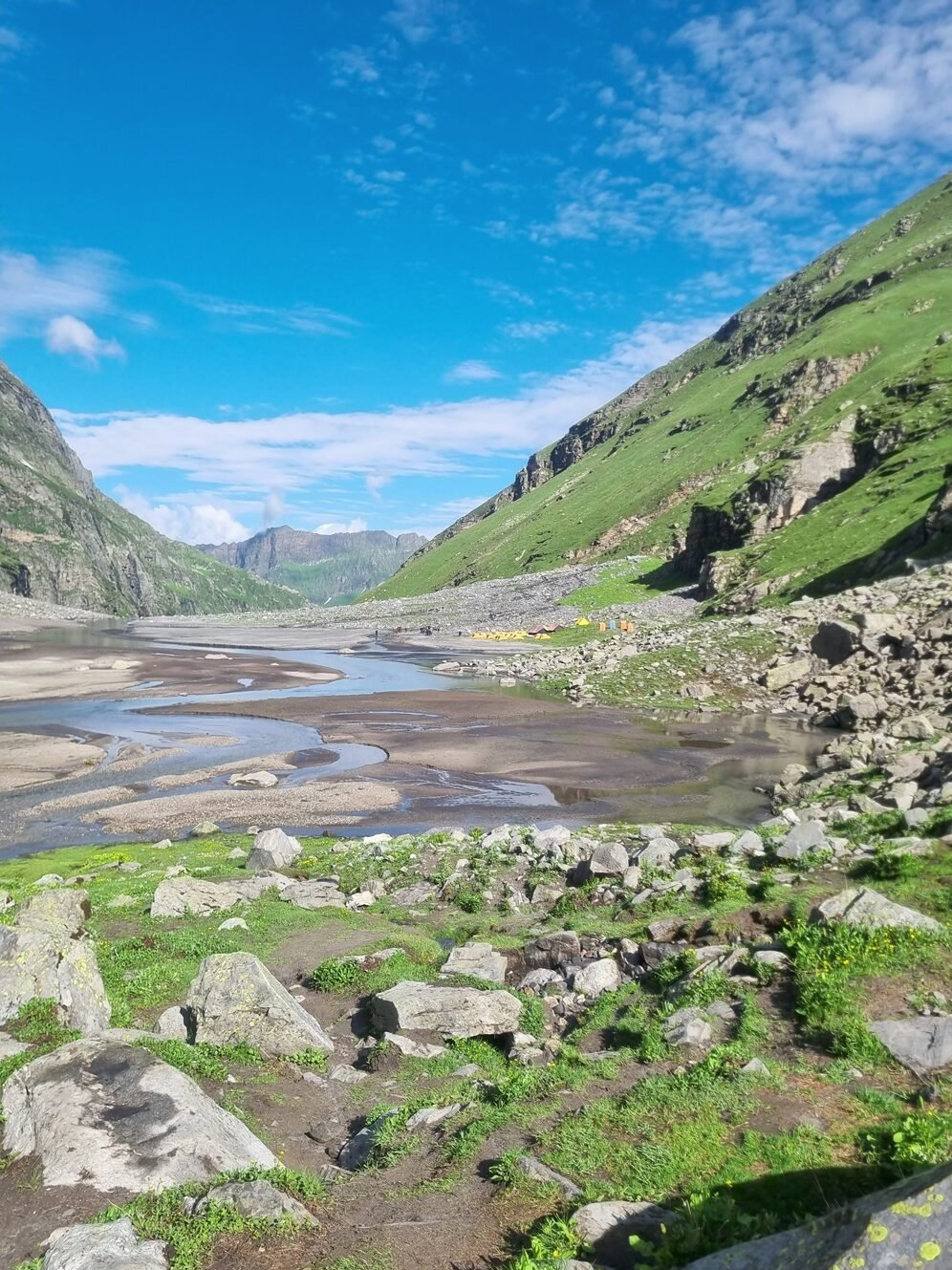
- Balu Ka Ghera, meaning ‘bed of sand’, is a wide open camping area set beside a river, offering views of snow patches and grazing grounds.
- Overnight Stay: Tents at Balu Ka Ghera
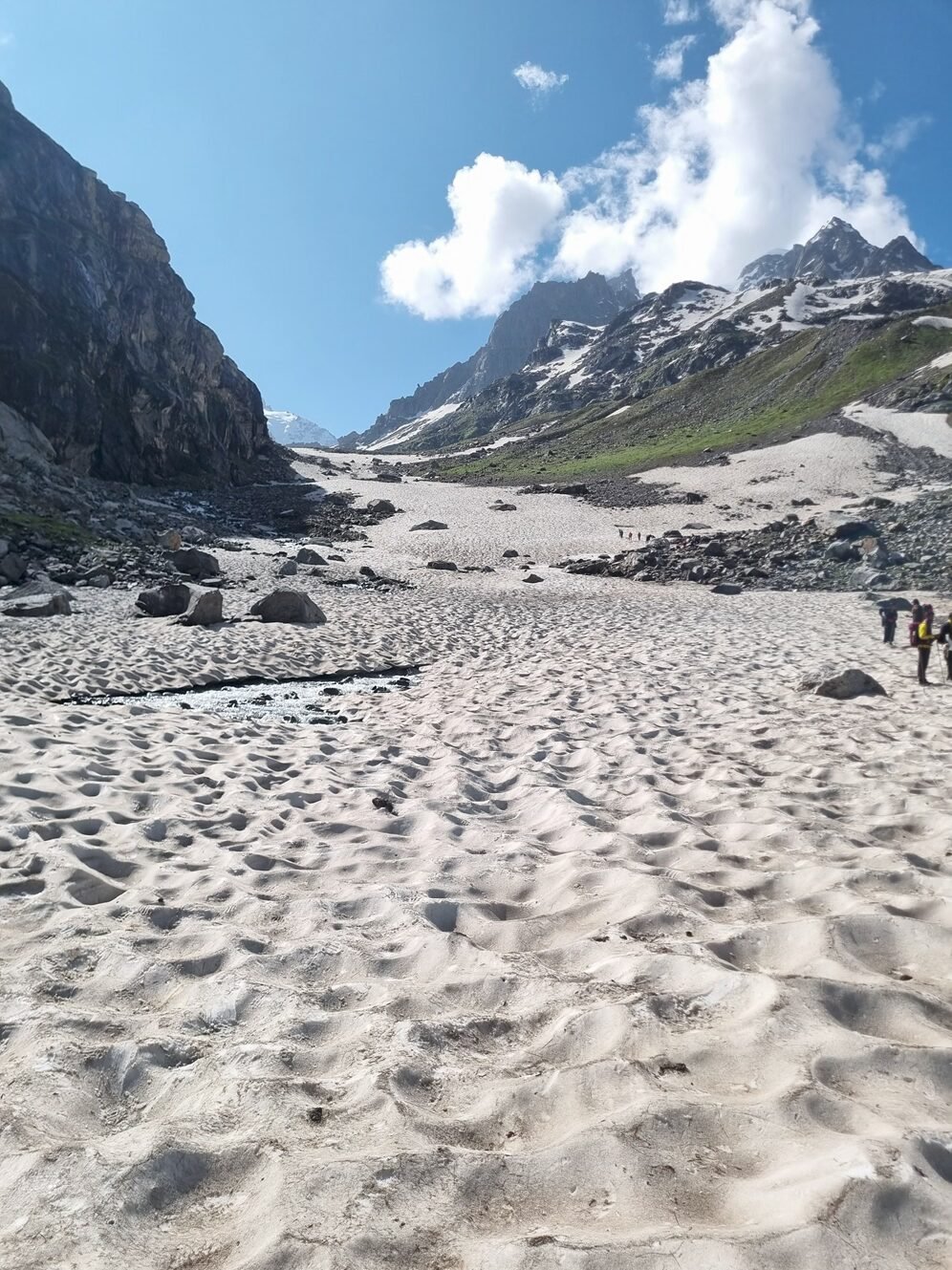
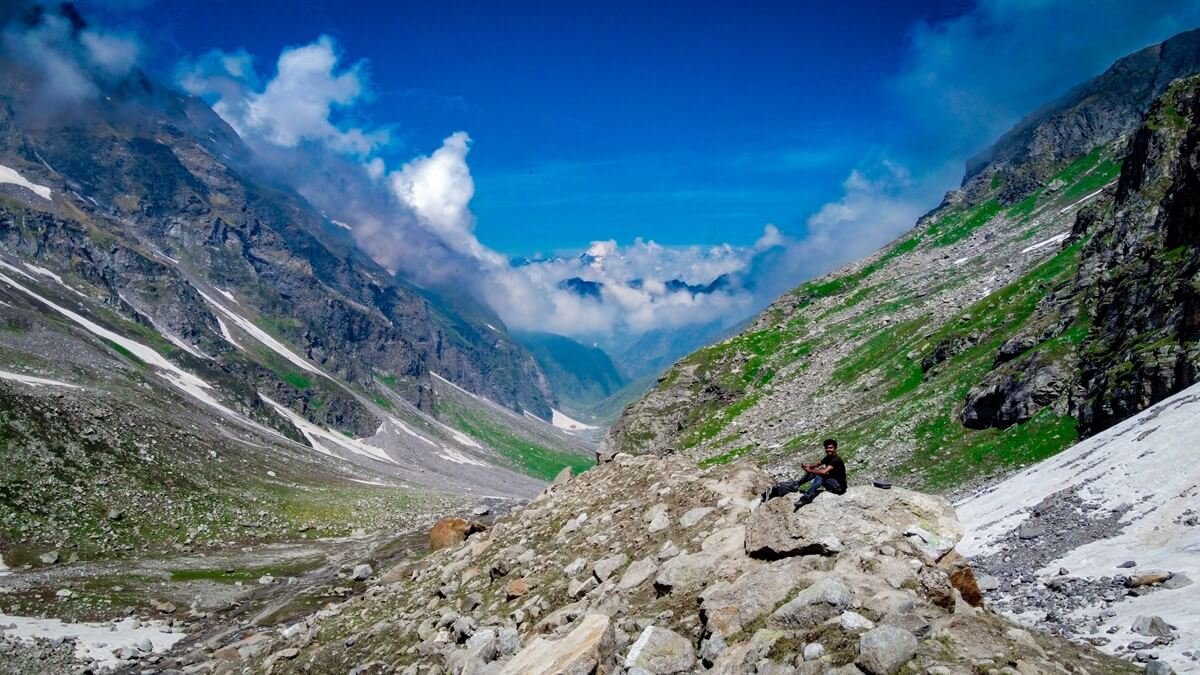
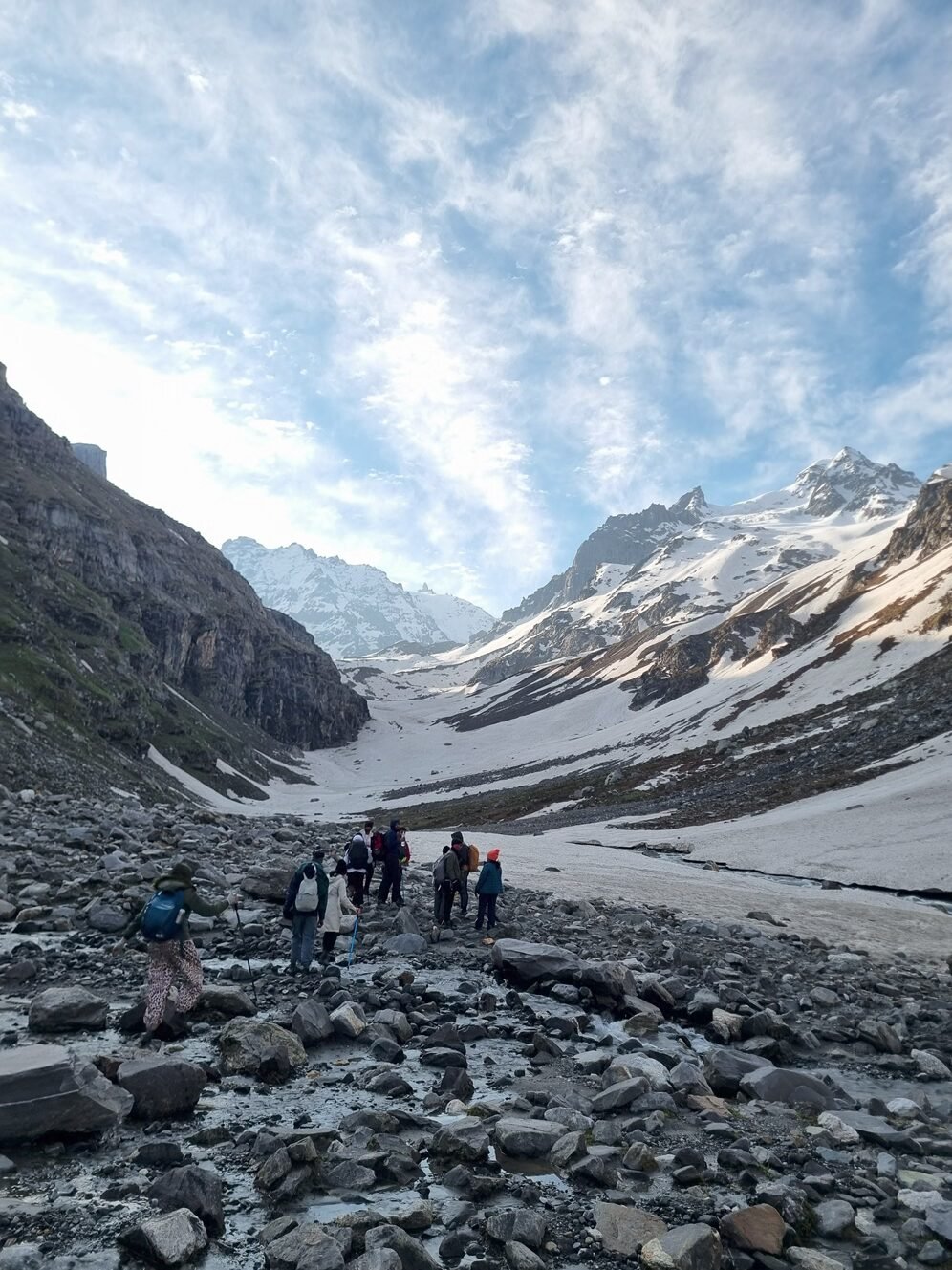
- Begin early with a strenuous climb over boulder fields and snow patches toward the pass.
- Step ascent to Hampta Pass, the highest point of the trek, offering thrilling views and a rewarding sense of achievement.
- Enjoy 360-degree views of the Himalayas, including peaks from Lahaul and Spiti on one. side and the lush Kullu Valley on the other.
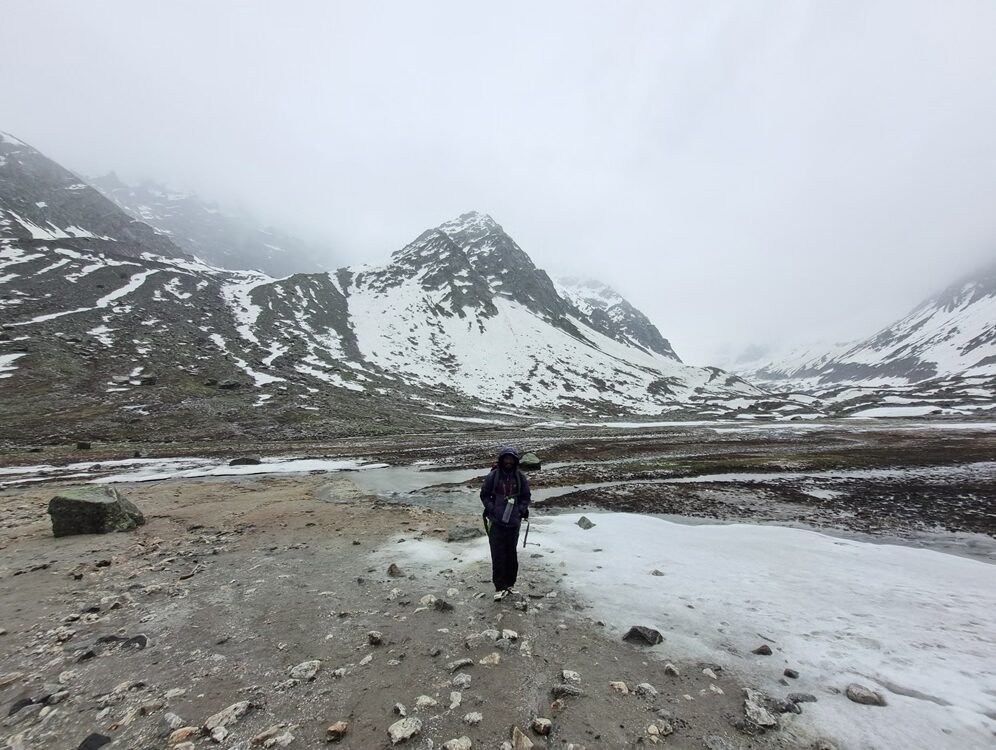
- The pass often has snow, even in mid-summer, making the experience both challenging and scenic.
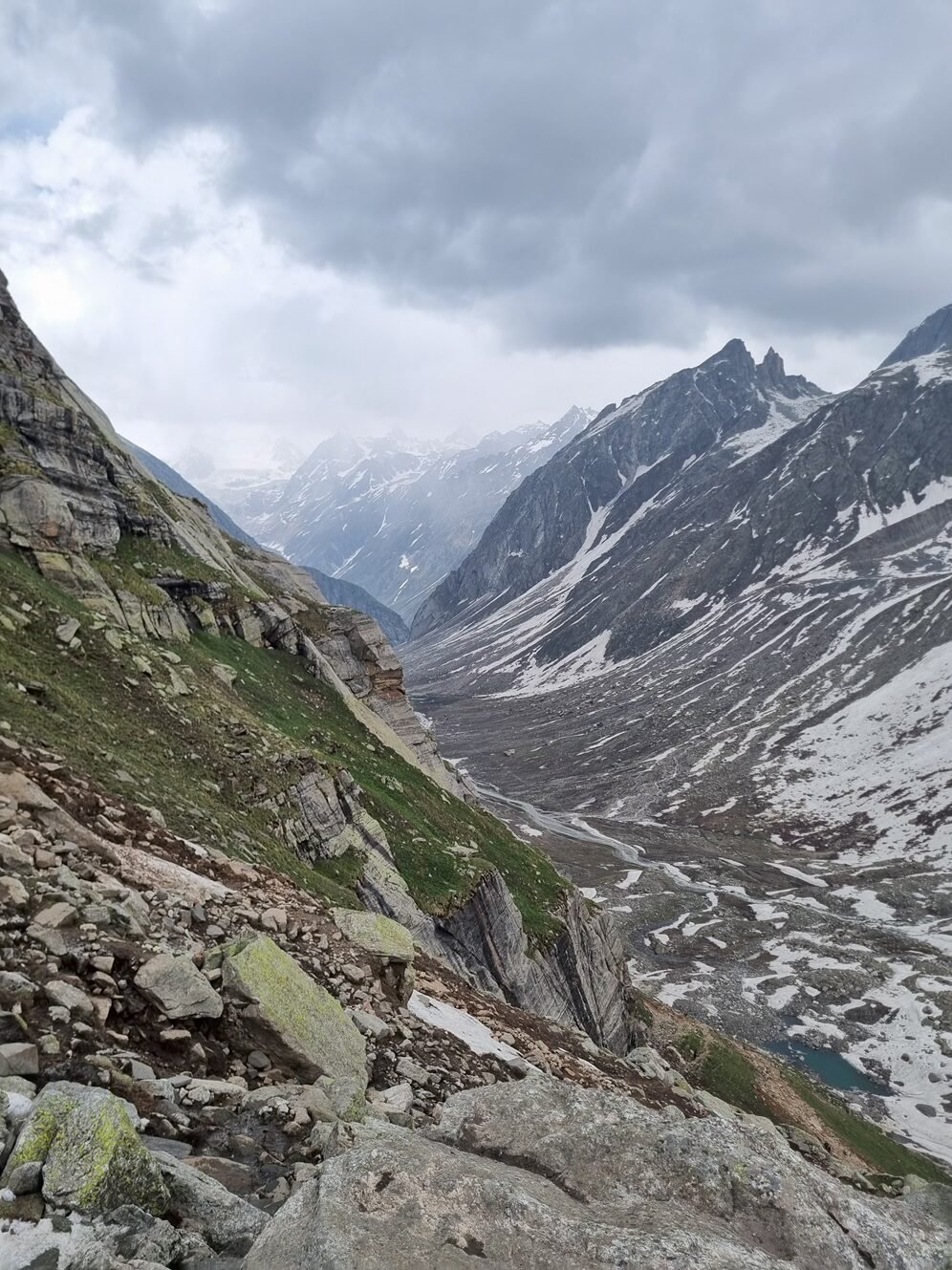
- Descend to Shea Goru through slippery scree and snow slopes use caution and trekking poles.
- The campsite is set on a grassy patch beside a stream, with panoramic views of barren cliffs and snowy ridges.
- Overnight Stay: Tents at Shea Goru
- Begin the descent from Shea Goru with a gentle trail along the river, surrounded by barren cliffs and alpine shrubs.
- Trek to Chhatru, the roadhead, while soaking in changing landscapes that mark the transition from Spiti’s desert to greener terrain.
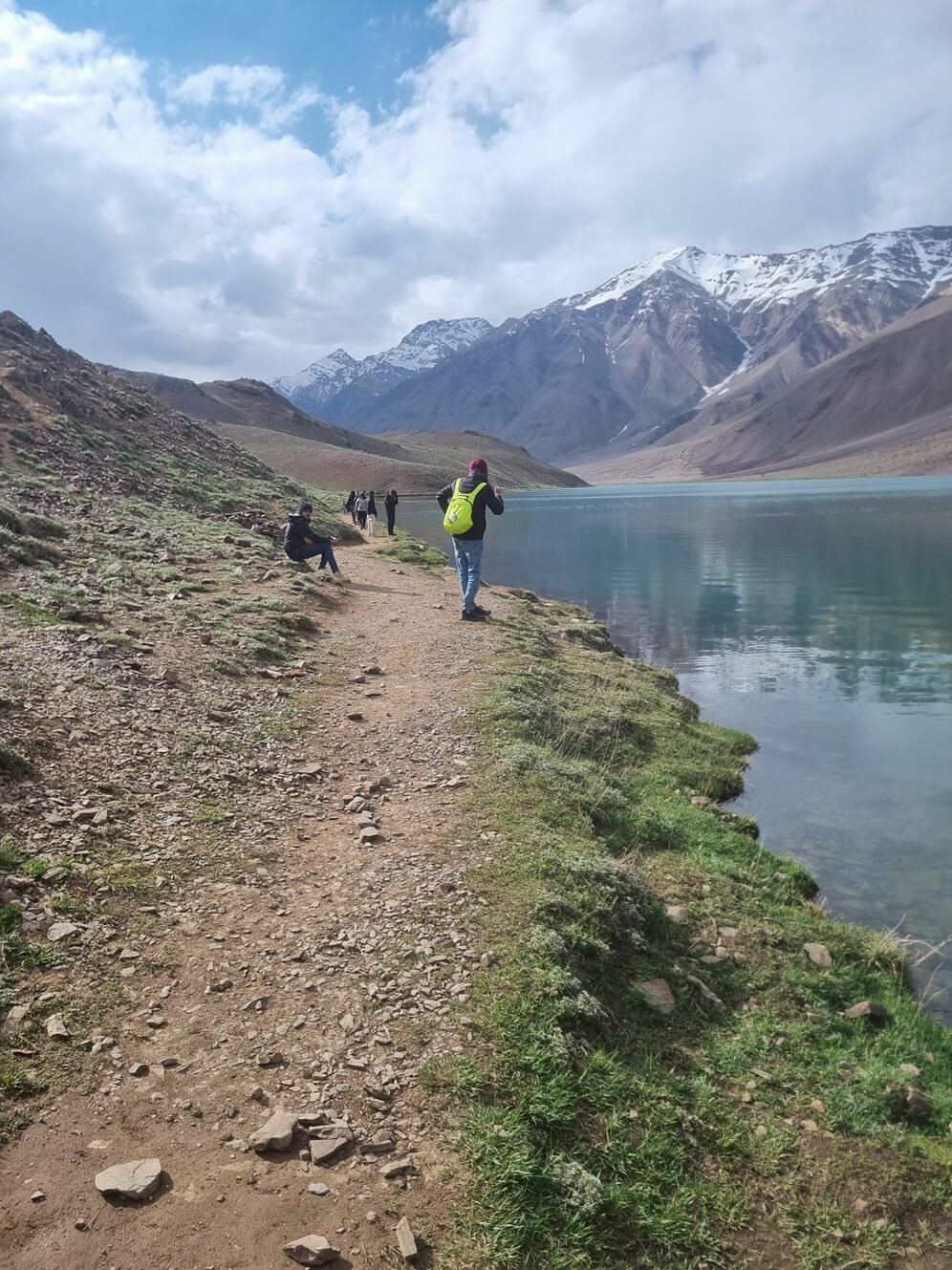
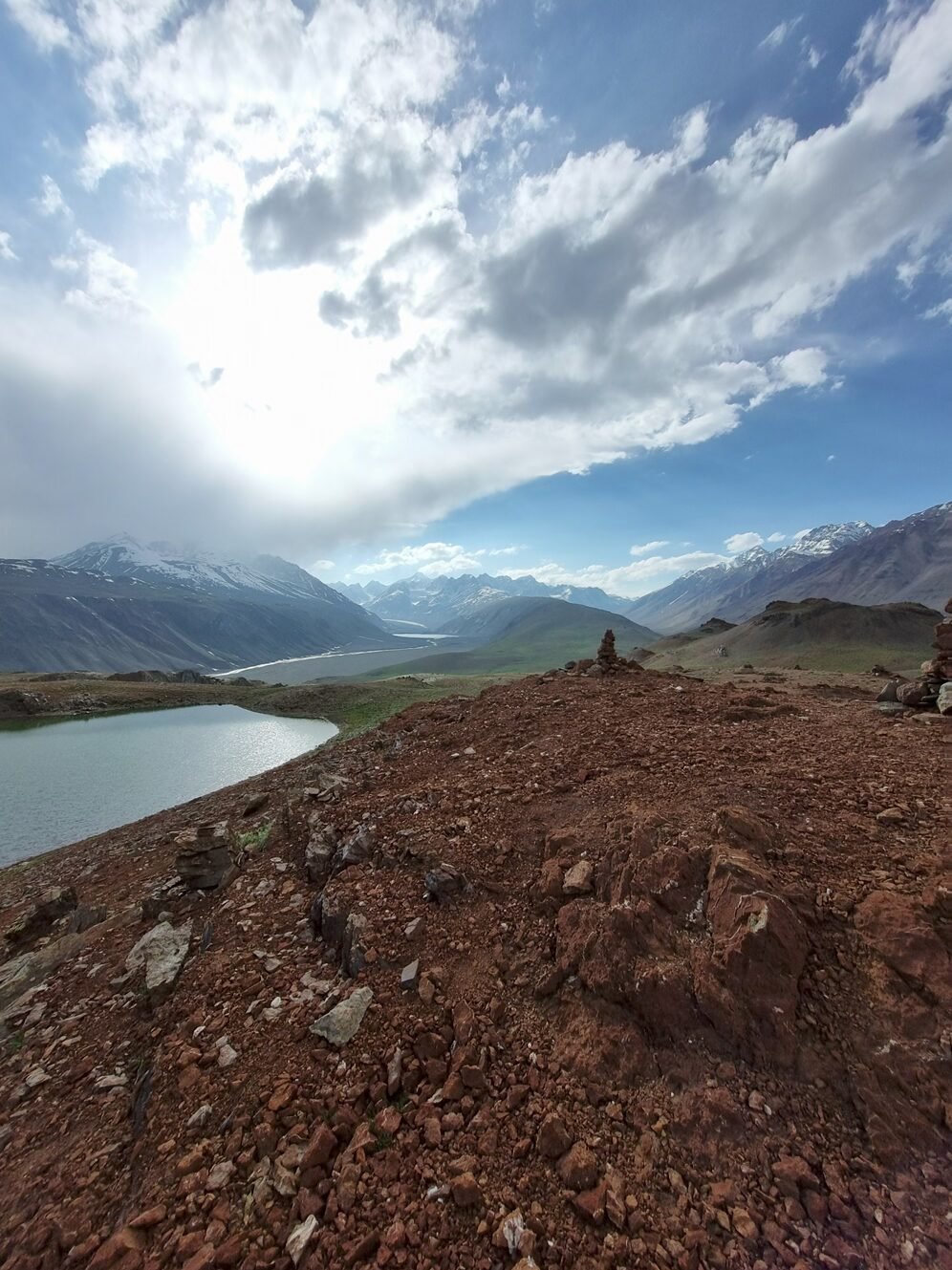
- Drive to Chandratal Lake (optional, road & weather dependent), one of the most beautiful high-altitude lakes in the Himalayas.
- Spend time by the turquoise lake, surrounded by towering mountains, perfect for photography and quiet reflection.
- Return to camp at Chhatru, enjoying a hot meal and recounting the journey.
- Overnight Stay: Tents at Chhatru
- Drive back to Manali through the Lahaul Valley.
- Reach Manali before afternoon for departure or onward travel
Inclusions & Exclusions
- All meals from Day 1 lunch to Day 5 breakfast
- Accommodation during trek (shared tents, typically 3-4 persons per tent
- Tent, sleeping bag, mats, crampons & gaiters (if required)
- Transport from Manali to trek start point and back
- Experienced trek leader and support staff
- Forest entry and camping fees
- Meals during transit to/from Kasol
- Personal expenses (laundry, tips, etc.)
- Porter or mule for personal luggage
- Any personal trekking gear (shoes, jacket, etc.)
- Emergency evacuation or travel insurance
- Extra 5% GST
Things to Carry
- Trekking shoes
- Warm layers (thermal, fleece, down jacket)
- Waterproof jacket & pants
- Trekking pole
- Backpack (40-50L)
- Sunglasses, sunscreen, gloves, cap
- Water bottles & energy snacks
- First-aid kit & essential medicines
- Lunch box
- Personal toiletries & towel
- Headlamp/torch
Things to Remember
- Carry a valid government-issued photo ID for trek registration.
- Mobile network is unreliable inform family in advance.
- Keep yourself hydrated and maintain a steady pace.
- Follow your trek leader’s instructions for safety.
- Avoid littering-carry a reusable waste bag.
- Prepare for sudden weather changes by layering your clothing.
- Carry sufficient cash as ATMs are unavailable in remote areas.
- Respect local customs and traditions while passing through villages.
Cancellation Policy
- Cancellation 30 days before departure: Full refund (minus processing charges)
- Cancellation 15-29 days before departure: 50% refund
- Cancellation less than 15 days before departure: No refund
- Trek Transfer: The trek can be transferred to another person if requested at least 7 days before departure. Any additional cost due to name changes in permits or logistics will be borne by the participant.
Note: The cancellation policy is subject to change based on weather conditions, government regulations, or unforeseen circumstances. In case of trek cancellation due to natural disasters or emergencies, alternative options or partial refunds may be provided.
Trek Map
FAQ's
Most easy–moderate treks require you to comfortably walk 8–10 km per day with a backpack. If you can jog 3–4 km in 25–30 minutes without stopping, you’re good to start.
Choose treks with 5–6 days total, max altitude ≤ 12,000 ft, and daily altitude gain ≤ 600–800 m. Examples: Kedarkantha, Dayara Bugyal, Triund, Hampta Pass (easier season).
- Layering: base + fleece + padded jacket
- Waterproof shell (jacket & pants)
- Trekking shoes, 3–4 pairs of socks
- Gloves, beanie, sun cap
- 1–2L water bottle or hydration pack
- Headlamp, sunscreen (SPF 50), lip balm
- Personal meds & basic first-aid
Trekking shoes (ankle support, stiffer sole) are safer on rocky or snowy terrain. Trail runners are lighter and fine for dry, well-made trails.
- Ascend gradually; hydrate well
- Eat light, avoid alcohol & smoking
- Know symptoms: headache, nausea, fatigue, loss of appetite
- Tell your leader early—do not ignore signs
- Follow evacuation & medication protocol advised by your trek operator/doctor
Highly recommended. Pick a policy covering high-altitude trekking, evacuation, trip cancellation, and medical expenses.
Wake up by ~6 am, hot breakfast, hike 4–6 hours with snack breaks, reach camp by early afternoon, hot lunch, rest/side walks, early dinner, and sleep by 9 pm.
Expect dry pit or bio-toilets at camps. Carry toilet paper, hand sanitizer, and a personal hygiene kit. Follow Leave No Trace principles.
Yes, with trek-specific seasons: monsoon = lush meadows but slippery trails; winter = snow & cold, need proper gear. Always check seasonal suitability.
3–4 weeks out: 4–5 days/week of brisk walking or jogging + 2 days of strength (squats, lunges, core) + one long hike each week if possible.
start_date.Reviews
Write a review
Other Famous Treks
- Uttarakhand
- 7D / 6N
- 15,069 ft (4,594 m)
- 40 km
- Uttarakhand
- 6D / 5N
- 15,200 ft (4,633 m)
- 40 km
- Himachal Pradesh
- 5D / 4N
- 14,100 ft (4,298 m)
- 26 km